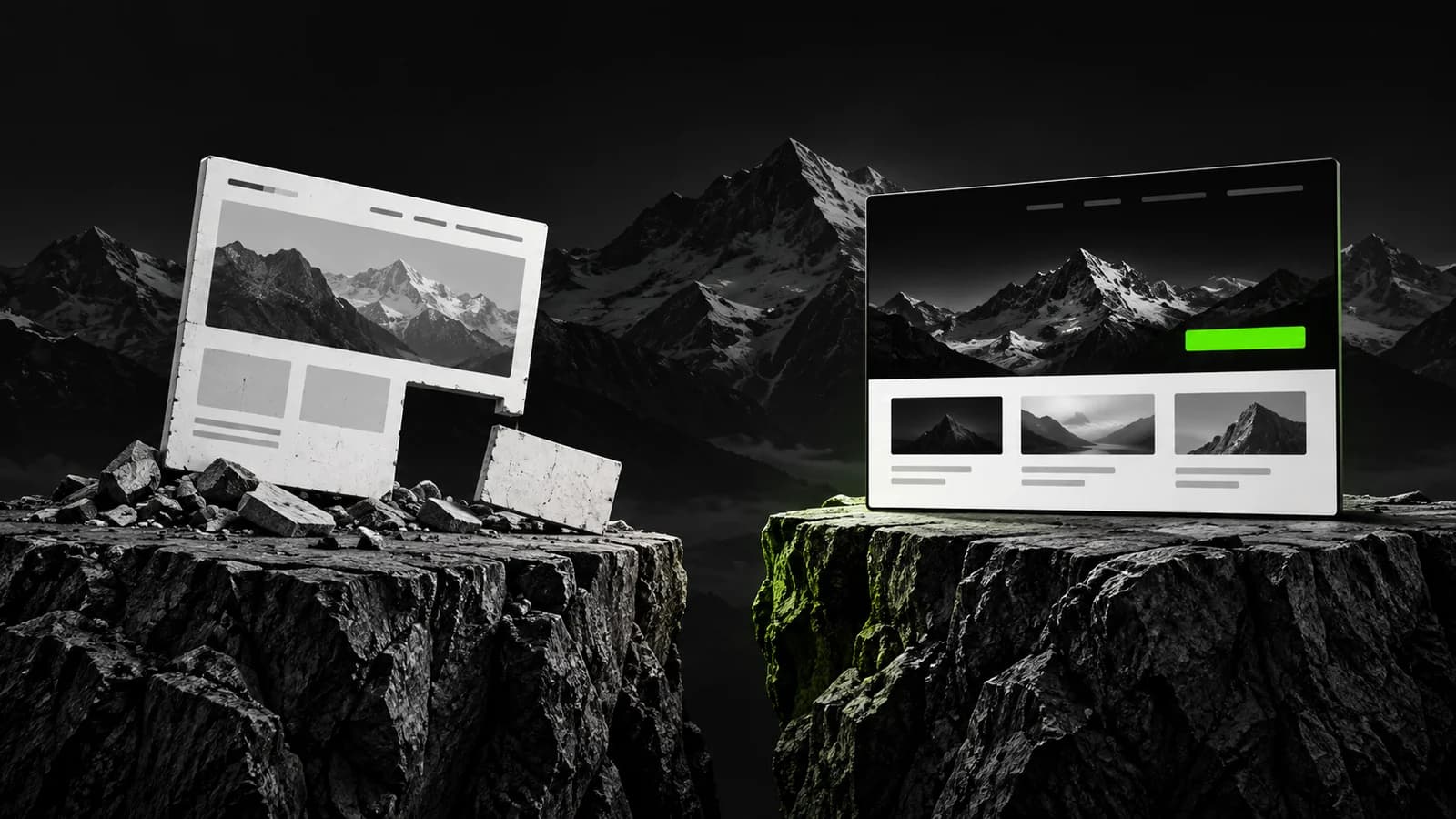
A €300 website is tempting. The quote fits on one line, the amount is easy to spend without a second thought, and in two weeks you exist online. On paper, it is a good deal. In practice, it is often the most expensive purchase a tradesperson or local business makes, because the costs keep adding up long after payment.
Let us look at why, calmly and fairly. There are honest providers offering low prices. But a price that low forces choices, and those choices have a cost elsewhere.
What a €300 website really includes
At that price, the provider cannot spend more than a few hours on your project. So they start with a ready-made template, paste in your copy and photos, and deliver. The result looks like the garage in the next town, which bought the same template.
What almost always gets cut: SEO work, which takes time, proper mobile adaptation and, above all, what happens afterwards. Once the website is delivered, it is yours, along with its updates, failures and questions. The provider has already moved on to the next project.
The hidden costs that follow
The advertised price is never the whole cost. Here is what gets added, almost every time:
- Hosting and domain renewals every year, often at rates that rise after the first term.
- Every change billed separately: new opening hours, another service, a replacement photo, and the meter keeps running.
- Time spent chasing a provider who no longer replies, or finding out who holds the website login details.
- A complete redesign after two or three years because the website has never made the phone ring.
- And the largest item, invisible on every invoice: customers who went to a competitor ranking higher on Google.
Take a hairdresser whose website never appears when someone searches for a salon in their town. Week after week, customers who would have chosen them book elsewhere. No invoice will ever show that lost revenue, yet it is the most expensive part.
What €1,490 actually pays for
The price difference does not buy a prettier website. It buys time spent on what makes people call: pages designed for your trade and town, a Google profile set up and linked to the site, real photos of your work presented well, and a clickable number on every page.
It also buys ongoing support: someone who looks after the website, makes changes when you need them and shows you each month what the website produces. A restaurant changing its menu or a landscaper adding recent gardens should never have to wonder what that will cost.

The right question to ask before signing
Do not just ask ‘how much does the website cost?’ Ask ‘what happens after launch?’ The answer separates the two approaches: who hosts, who makes changes, who monitors, who reports back to you, and at what price?
Ask who owns what, too. The domain name should be in your name, not the provider's. When the relationship ends, that detail decides whether you keep your address or start from scratch. A plumber who has spent years making an address known cannot afford to lose it.
Finally, be wary of paying for a website before seeing anything. A professional who trusts their work can show you what yours will look like before asking for a penny.
That is exactly what we do: request your €0 mockup, receive it within 48 hours and judge the work before paying anything. You get a fixed, final price on the first call. If the mockup does not convince you, you have lost nothing.