To start an SEO and GEO project, prepare a precise description of your offers, your customers’ questions, your supporting evidence and the data already available. This brief helps identify the pages to work on and the results to track. You can start with simple documents: the scoping stage is precisely where missing information gets organised.
Choose the service you want to grow
A company may offer ten services and want to grow only two of them this year. Identify the ones that matter, the customers you want, the areas you actually serve and your capacity to handle new enquiries. Specify the enquiries you do not want too: a discontinued activity, an area too far away or a type of project outside your scope.
For each priority, describe what the customer buys, what is included, the options and the conditions that affect the quote. For example, a laundry seeking commercial contracts needs to discuss volumes, collection and regular working arrangements. A page focused solely on cleaning one item attracts a different kind of enquiry.
Gather the questions asked before signing
Review your recent sales conversations. Which questions keep coming up about price, timing, stages, commitments or choosing a provider? Objections often reveal the most useful subjects to address. A client asking how to prepare their content needs a different answer from one comparing two offers.
- The questions you often answer on the phone.
- The elements your customers compare before choosing.
- The information they need to provide before you can start.
- The situations your offer suits, and those that need a different scope.
These points inform the commercial pages and supporting content. Our SEO guide explains how to connect these needs with observed searches. There is no need to create a page for every variation of the same question.

Prepare evidence with its context
Gather projects you can show, photos you have, testimonials you have permission to use and results with their measurement periods. For each project, note the initial need, your contribution and what was actually delivered. For a results screenshot, also record the tool, date and scope displayed.
At Klymax, Isack Hadjar’s official website and his online shop serve two different journeys. Presenting them separately makes the work clearer. The same precision applies to your own references: a review about an advertising campaign does not automatically describe an SEO result.
List your tools and access permissions
List the website, its content management tool, hosting, domain, Google Business Profile, Search Console and the analytics tool in use. For each, identify who can grant access. Named invitations and appropriate permissions avoid circulating the company’s main password.
Keep existing exports before work begins: pages, clicks, impressions and enquiries received. If there is no history, simply record that. The project can start by setting up measurement and checking the contact journey; past figures should not be reconstructed from estimates.
Define what GEO should observe
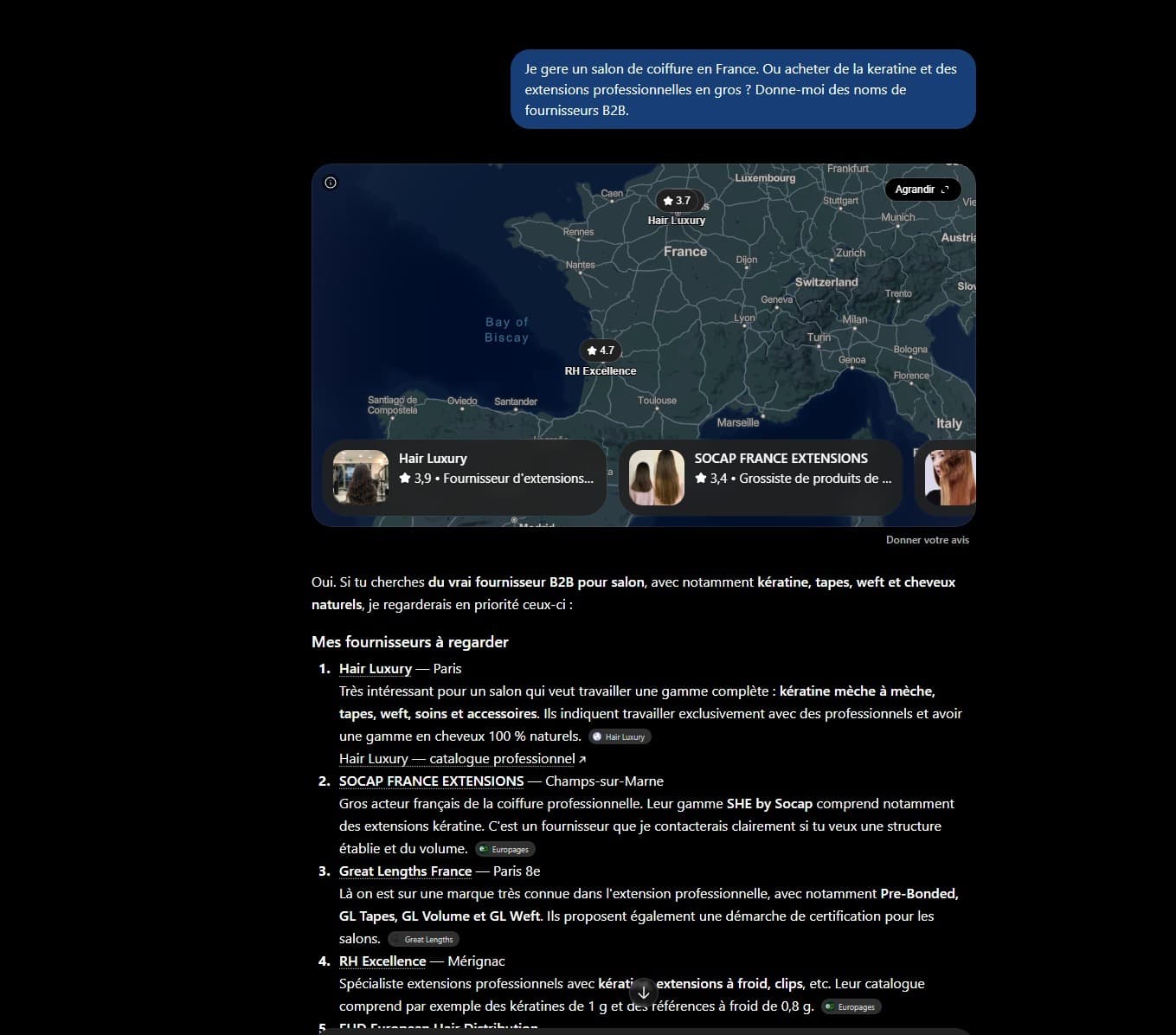
Choose the products relevant to your customers and a few questions representative of their decision. A question that already names your brand checks how it is presented; an unbranded question observes whether the business can be discovered. Keep those two uses separate.
Google explains that SEO fundamentals remain relevant to Search’s AI features. Work on pages, access and evidence therefore forms a shared foundation. Observations in ChatGPT, Claude or Perplexity then require the product and context used to be specified. The quote should name the engines and questions actually monitored.
Agree a scope everyone understands
At the end of scoping, you should know the priority pages, expected content, necessary access, people responsible for approval and the work schedule. One contact on the company side makes decisions easier. Also agree how to handle an additional request without disrupting the project.
Klymax’s SEO and GEO service starts with initial setup from €1,500 excluding tax. Monthly support is quoted according to the work and measurement agreed. The foundations shared by SEO and GEO are addressed together. To prepare for the first conversation, send your website address and the services you want to grow; we then clarify what information is useful to gather.
Sources and references
Frequently asked questions
01Do I need all access permissions before the first conversation?
No. Start by identifying the tools and the people who administer them. Scoping determines which access is needed for the work and measurement.
02What should I prepare if my website is new?
Your offers, target customers, sales questions and supporting evidence are enough to scope the work. If the history is short, the first measurement becomes the baseline for later comparisons.
03Does setup include monthly support?
At Klymax, initial setup and monthly support are two separately priced scopes. The quote specifies the pages, content, engines and observations included.